

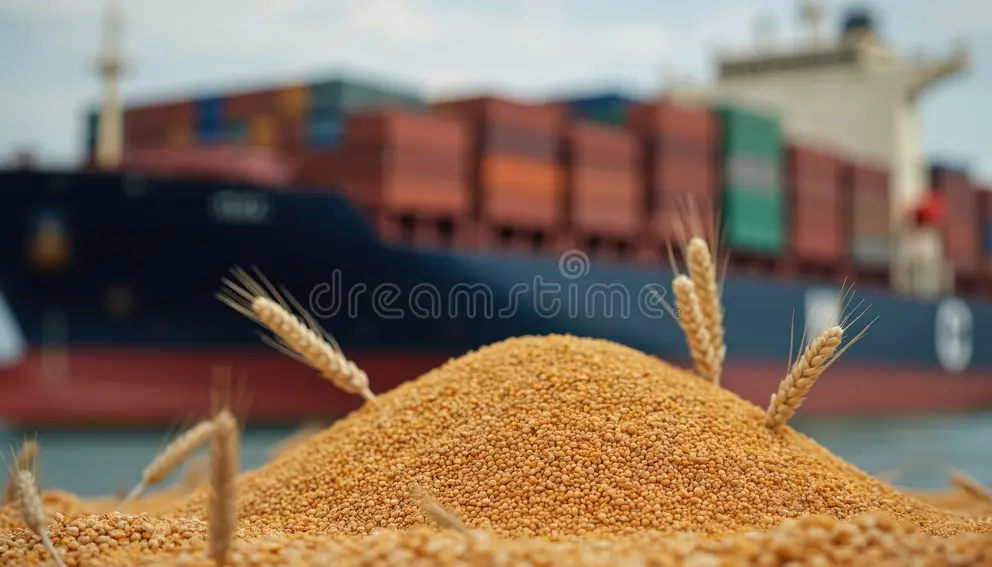
Four years in, the Russia–Ukraine war has stopped behaving like a single shock and started behaving like a standing regulatory regime. The EU’s sanctions program has now run to 21 rounds, each one adding new restricted entities, tanker registries, and financial-services carve-outs. In August, the US Senate passed a bill setting tariffs as high as 100% on countries that keep importing Russian energy. Two weeks earlier, Ukraine’s strikes on Sea of Azov shipping had already knocked out a chokepoint that normally carries more than a third of Russia’s wheat exports to world markets.
This isn’t a piece about the war itself. It’s about what a sanctions regime that adds a new package every few months does to a company that still has Russian or Ukrainian entities anywhere in its supplier tree — and about how many companies only discover that exposure once a shipment gets stopped at a border.
What actually happened to supply chains
The exposure showed up in three places most procurement teams weren’t watching closely enough.
Titanium & aerospace
Russia supplied roughly a third of the titanium used across Boeing, Pratt & Whitney, GE, and Rolls-Royce production, and about half of Airbus’s. Embraer sourced essentially all of its titanium from Russian mills. None of those relationships were secret — they were just concentrated, and concentration is exactly what a sanctions regime punishes. Western aerospace firms have spent four years deepening ties with US and Japanese titanium producers, a shift that only looks obvious in hindsight to the companies that started it before the first sanctions package landed.
Neon, chips, and the silicon supply chain
Nearly two-thirds of the world’s neon gas — essential to the lithography step in semiconductor manufacturing — came from a single Ukrainian refiner, Iceblink, before the war halted its production. Chipmakers with no direct Ukrainian supplier on record still felt this: neon moves through distributors and gas brokers several tiers removed from the fab floor, which is exactly the kind of exposure that doesn’t show up in a standard vendor list.
Wiring harnesses, grain, and the Kerch closure
When the war began in 2022, German wiring-harness maker Leoni halted production at its Ukrainian plants within days — and Volkswagen had to pause assembly lines in Germany almost immediately, because roughly a fifth of the wiring harnesses in German-made cars were sourced from Ukraine. That was the first lesson in how a single-country dependency several tiers down a bill of materials can stop a production line thousands of miles away with no warning at all.
“Mandatory due-diligence checks on tanker sales and a ban on maintenance services for Russian LNG vessels and icebreakers.”
— Council of the European Union, on the EU’s 21st sanctions package, July 2026
In July 2026, Ukraine’s strikes on vessels in the Sea of Azov effectively closed the Kerch Strait corridor — the route that normally carries over a third of Russia’s wheat exports to the Black Sea. Global grain traders with any exposure to that corridor, directly or through a counterparty, had to reroute or absorb the disruption with essentially no notice. The EU’s 21st sanctions package, passed the same month, added mandatory due-diligence checks on tanker sales and banned maintenance services for Russian LNG vessels and icebreakers — meaning even companies with no Russian counterparty at all had to re-verify every shipping and logistics partner touching Russian-linked cargo.
The pattern across all three: the companies that struggled weren’t necessarily the ones with the deepest Russian or Ukrainian exposure. They were the ones who didn’t know how deep that exposure ran until a sanctions package, a strike, or a halted plant forced them to find out.
Track exposure as a living number, not a one-time audit
Every procurement team ran a Russia exposure audit in 2022. Very few teams re-run it every time a new sanctions package lands — and 21 packages in, that’s the gap that matters. Sanctions lists change, shipping restrictions tighten, and a supplier that was clean last quarter can be a liability this one.
The precondition for staying ahead of that is the same as it’s always been: a live, structured view of who your vendors are, where their own suppliers sit, and how quickly you could requalify a replacement if a given relationship suddenly became a sanctions problem. Most companies still hold that information in spreadsheets that get updated once a year, if that.
Where ScopeMatch fits
Making the 22nd package a dashboard check, not a fire drill. Here’s how the platform lines up against each failure point above.
Vendor risk ratings & dashboard rollups
Every tracked vendor carries a risk rating and a location on record, rolled up across your whole vendor base. “How much of our spend touches a newly sanctioned entity or region” becomes a dashboard query, not a scramble every time a new package drops.
Workflow-based qualification
Standing up a replacement supplier once a sanctions package hits runs through a defined pipeline — stages, checklists, document requirements — instead of an improvised scramble under deadline pressure.
Document tracking with expiry alerts
Sanctions attestations, tanker due-diligence records, and customs paperwork are centralized per vendor with automated expiry alerts, so a supplier’s compliance status doesn’t quietly go stale between sanctions rounds.
Incidents with resolution records
A halted shipment, a paused production line, or a flagged counterparty becomes a logged incident — type, severity, status, owner — instead of an email thread nobody can find when the same vendor comes up again two packages later.
Assignment & role-based access
Every vendor and incident can be assigned to a specific team member, with admin, manager, reviewer, and viewer roles controlling who can act. When a sanctions deadline lands, “who owns this relationship” isn’t a question anyone has to chase down.
Comments with notifications
Comments on a vendor or inquiry notify the right people on both sides, so a fast requalification or a sanctions-driven renegotiation stays in one place with a record attached, not scattered across inboxes.
Twenty-one sanctions packages in, this isn’t a crisis with an end date — it’s a compliance environment that keeps moving, and it’s training procurement teams everywhere to expect the same from the next conflict, wherever it happens. The companies handling it well aren’t the ones with zero Russian or Ukrainian exposure. They’re the ones who can answer, in minutes, exactly how much exposure they have and how fast they could replace it. That’s what ScopeMatch is built to make routine — so the 22nd package is a dashboard check, not a fire drill.
Sources: GEP, Deloitte Insights, Quest Metals, University of Arkansas, MIT Sloan, the Council of the EU, Steptoe, and Al Jazeera. ScopeMatch — supply chain visibility for global manufacturing, distribution, and operations.