

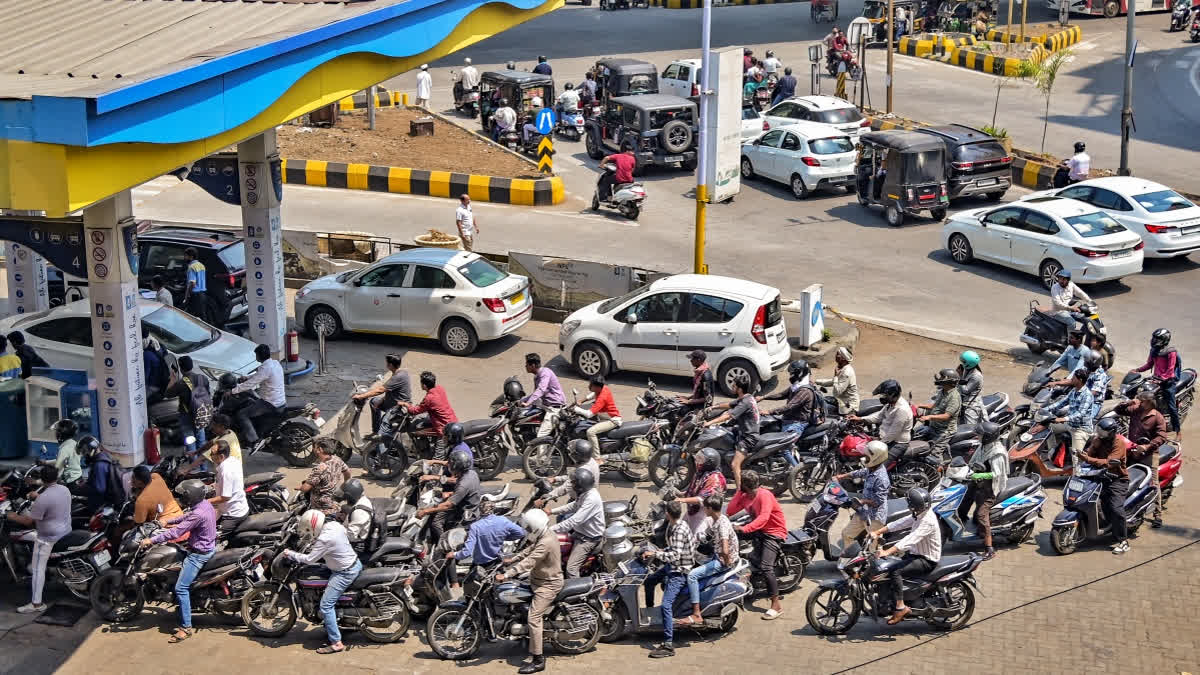
In March 2026, India’s oil ministry called shortage reports a “deliberate misinformation campaign” and said every petrol pump in the country was adequately stocked. By May, Oil Secretary Neeraj Mittal was even more direct: no rationing, and “not going to happen.” That same month, state-run retailers IOC, BPCL, and HPCL imposed 90-day restrictions on diesel sales, after losses on every litre sold climbed as high as ₹38 before easing to ₹35.50 following a partial price adjustment.
This isn’t a piece about who’s right. It’s about what happens to a trucking fleet, a manufacturer, or a distributor’s delivery schedule when the official position and the situation at the pump diverge — and about why companies that planned around the official numbers alone got caught flat-footed.
What actually happened to fuel supply and logistics
The squeeze moved through three layers, each harder to see from outside than the last.
A price freeze meets a regional war
Between April 2022 and May 2026, India’s state fuel retailers held retail diesel and petrol prices almost flat, with a single ₹2 per litre cut in 2024. That freeze protected consumers through several years of global volatility — until the 2026 conflict in the Middle East pushed crude and import costs up sharply, and the same retailers that had absorbed years of smaller shocks suddenly couldn’t absorb this one without real damage. Losses hit roughly ₹1,000 crore a day by early May.
Restriction without the word “rationing”
What followed wasn’t a formal rationing order — it was a 90-day cap on how much diesel state retailers would sell, imposed quietly enough that it coexisted with public statements denying any supply problem existed. For a fleet operator or a distributor, the practical effect was the same either way: less fuel available at the pump, on a schedule nobody official was willing to publish in advance.
Trucking, logistics, and the companies downstream
Diesel is the input that makes India’s freight network move — inter-state trucking, cold chain, last-mile delivery all run on it directly. When supply tightens at the pump, the first symptom isn’t a dramatic shutdown; it’s small, compounding delays as drivers queue longer, routes get reshuffled toward stations that still have stock, and fleet managers start rationing routes on their own initiative before anyone tells them to.
“Not going to happen.”
— Neeraj Mittal, Oil Secretary, Government of India, on the possibility of fuel rationing
Consumer-side panic buying made the on-the-ground picture worse than the underlying numbers alone would suggest — drivers hoarding fuel in containers and shifting to bulk purchases ahead of expected price hikes, which is exactly the kind of demand spike that turns a manageable supply gap into visible stockouts at individual stations, regardless of what the national stock-cover figure says. Companies running their own logistics — rather than outsourcing it to a carrier who absorbs this risk invisibly — felt it first and most directly, in missed delivery windows and unplanned route substitutions that don’t show up in any national statistic.
The lesson isn’t that the government was lying or that the shortage reports were exaggerated. It’s that “national stock cover” and “what’s available at your regional supplier’s pump this week” are two different numbers, and companies that only tracked the first one were the ones surprised by the second.
Track regional supply reality, not just the headline number
A national stock-cover figure is a reasonable macro indicator and a poor operational one. Fuel and freight capacity get tight regionally and by vendor long before — or without ever — a national shortage becomes official. The companies that kept moving through the 2026 squeeze were the ones tracking their actual logistics vendors’ reliability and capacity in real time, not the ones relying on a ministry statement to plan next week’s deliveries.
That requires the same infrastructure whether the disruption is a fuel squeeze, a port closure, or a sanctions package: a current, structured record of which vendors are actually delivering, which are showing early strain, and how fast a backup could step in if one of them can’t.
Where ScopeMatch fits
Tracking vendor reality, not the headline number. Here’s how the platform lines up against each failure point above.
Vendor risk ratings & dashboard rollups
Every tracked logistics and supply vendor carries a risk rating, rolled up across your whole vendor base. Regional strain shows up as a dashboard trend well before it becomes a national headline either confirming or denying a shortage.
Workflow-based qualification
Qualifying a backup logistics provider or fuel supplier runs through a defined pipeline — stages, checklists, document requirements — so a regional squeeze doesn’t force an improvised scramble for capacity.
Document tracking with expiry alerts
Fuel supply agreements, transport contracts, and compliance paperwork stay centralized per vendor with automated expiry alerts, so a fast substitution doesn’t also mean discovering a lapsed agreement mid-crisis.
Incidents with resolution records
A missed delivery window or a route substitution becomes a logged incident — type, severity, status, owner — so a pattern of regional strain is visible in the data, not just in drivers’ anecdotes.
Assignment & role-based access
Every vendor and incident can be assigned to a specific team member, with admin, manager, reviewer, and viewer roles controlling who can act. When a regional supply gap forces a fast call, “who owns this route” isn’t a question anyone re-asks.
Comments with notifications
Comments on a vendor or inquiry notify the right people on both sides, so coordinating around a tightening fuel or freight market stays in one place with a record attached, instead of scattering across driver calls and WhatsApp threads.
Whether or not the word “rationing” ever gets used officially, the operational reality for companies that depend on trucking and regional fuel supply doesn’t change: capacity got tighter in 2026, unevenly, and mostly without warning. The companies that kept their delivery schedules intact weren’t the ones who believed the official numbers or the ones who believed the rumors — they were the ones tracking their own vendors’ actual performance closely enough that neither version mattered much. That’s the case for building that visibility before the next squeeze, not during it. ScopeMatch exists to be that visibility.
Sources: Bloomberg, Business Standard, National Herald, Athens Times, Business Upturn, Angel One, and Newsonair (AIR). ScopeMatch — supply chain visibility for global manufacturing, distribution, and operations.