

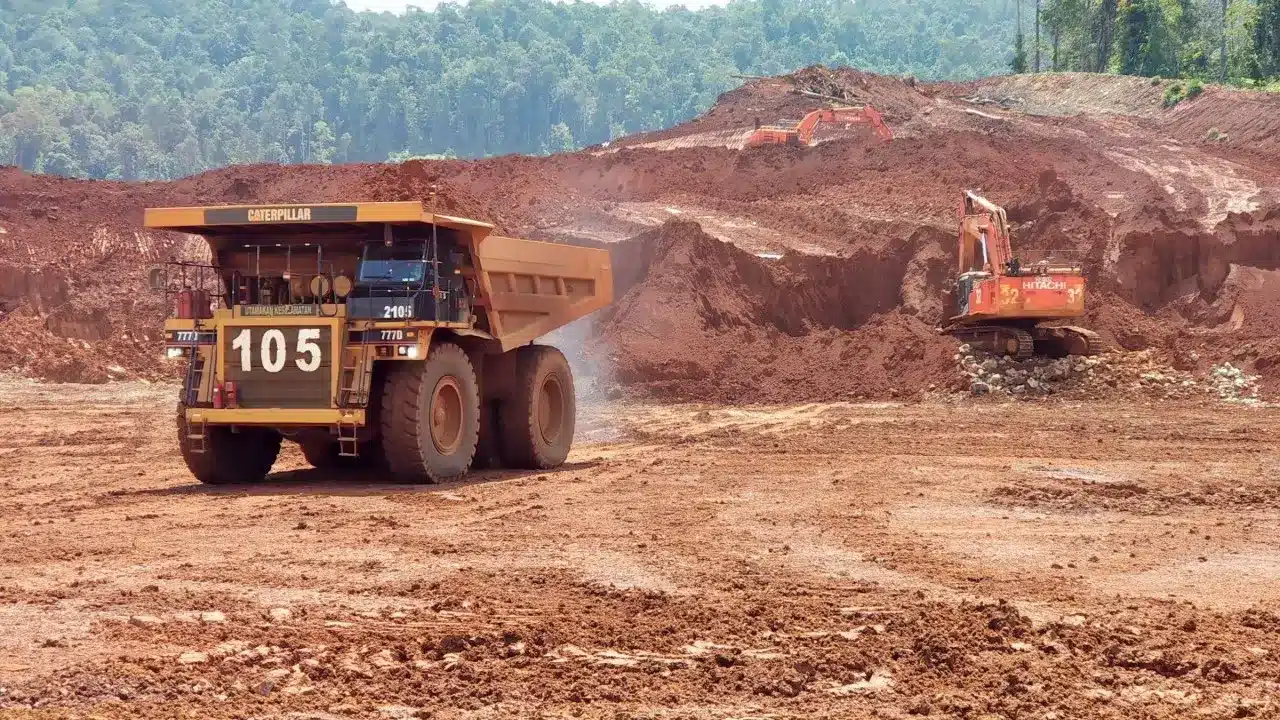
In 2014, Indonesia produced under 6 percent of the world’s mined nickel. By 2024 that share had passed
60 percent. In 2026, the government cut its own mining quota by nearly a third, from 379 million wet
metric tons to as low as 260 million, and for the first time forecasters expect a global nickel deficit
rather than a surplus. One country’s permitting decision now sets the tone for every battery and
stainless steel maker on earth.
This isn’t a piece about whether Indonesia is right to prioritize its own downstream industry over raw
exports. It’s about what it means, structurally, for every other participant in the nickel supply
chain when one country holds a majority position in a critical mineral and is actively willing to use
permitting policy to manage global price.
How One Country Got to 60 Percent
Indonesia’s dominance wasn’t an accident of geology alone. In January 2020, the government banned the
export of raw, unprocessed nickel ore entirely, after a partial ban on low grade ore had already been
in place for several years. The explicit goal was to force international buyers to build smelting and
refining capacity inside Indonesia rather than shipping raw ore out to be processed elsewhere, keeping
the value add, and the jobs, at home. It worked. Between 2014 and 2019 alone, production rose from
4.79 million wet metric tons to nearly 61 million, and dozens of smelters, many financed by Chinese
capital chasing the battery supply chain, were built on Indonesian soil. The European Union challenged
the ore export ban at the World Trade Organization and won a ruling against it in 2022. Indonesia has
continued the policy regardless.
From Ore to Everything Downstream
Having secured processing capacity, Indonesia’s 2026 policy moved a step further: rather than simply
controlling raw ore, it now caps how much ore can be mined at all, and extends export licensing to
ferronickel products containing as little as 4 percent nickel content, control that reaches well into
the semi-processed supply chain, not just the raw material. The government’s stated aim is to prevent
oversupply from crashing global prices, a legitimate concern for a country whose economy now depends
heavily on this single commodity. The practical effect is that a battery maker or a stainless steel
producer anywhere in the world is now planning production against a number set annually by Indonesian
regulators, not against a market price that reflects independent supply and demand.
Why this differs from a normal commodity cycle. Nickel prices have always moved with
supply and demand. What’s different now is that the supply side of that equation is concentrated
enough in one jurisdiction that a single regulatory decision, a quota set lower or higher than
expected, can flip the entire global market from a projected surplus to a projected deficit inside
one forecasting cycle, as it did in 2026.
Prevention: Track the Regulator, Not Just the Price
A buyer watching only the spot price of nickel is watching a lagging indicator. The RKAB quota
announcement, the export licensing threshold, and the smelter permitting pipeline all move first, and
all of them are publicly tracked policy decisions rather than market surprises. The companies least
exposed to the next quota cut are the ones who already treat Indonesian mining and export policy as a
dependency to monitor directly, alongside the vendors who ultimately supply them.
How ScopeMatch Maps to Each Failure Point
Six places where a documented view of the supply base, not the spot price alone, made the difference.
Vendor risk ratings and dashboard rollups
Every tracked vendor carries a location and a risk rating on record. Rolling that up shows
exactly what share of a company’s nickel-dependent supply traces back to Indonesian ore or
Indonesian smelters, before the next quota announcement, not after.
Workflow based qualification
Qualifying a supplier sourcing from the Philippines, New Caledonia, or a recycled nickel stream
runs through a defined pipeline, stages, checklists, document requirements, instead of a
scramble the week a quota cut is announced.
Document tracking with expiry alerts
Origin certificates, export licenses, and long term supply agreements are centralized per vendor
with automated expiry alerts, so a renewal window doesn’t quietly close while everyone assumes
someone else is watching it.
Checklist notes with document evidence
When a smelter confirms it can still meet a delivery volume under a tighter quota, that
confirmation attaches directly to the relevant checklist item with a note and the supporting
document, rather than living only in an email thread.
Incidents with resolution records
A supply cut tied to a quota reduction becomes a logged incident, type, severity, status, owner,
rather than a delay everyone recalls slightly differently once the immediate scramble is over.
Assignment, roles, and comments
Every vendor has a named owner, with admin, manager, reviewer, and viewer roles controlling who
can act. When a policy shift lands, comments on the affected vendor records notify the right
people immediately instead of scattering across separate threads.
The Broader Point
A commodity controlled sixty percent by one country isn’t a market in the ordinary sense anymore. It’s
a market with a policy layer sitting directly on top of it, and that policy layer moves on its own
calendar, not the calendar of the buyers who depend on it. Watching the price is necessary. Watching
the regulator, and knowing exactly which vendors in a company’s own network sit downstream of that
regulator, is what actually buys advance warning. ScopeMatch exists to keep that picture current.
Sources: Benchmark Mineral Intelligence, Argus Media, ING Think, Eco3min, European Commission, International Energy Agency, and Discovery Alert. ScopeMatch — supply chain visibility for global manufacturing, distribution, and operations.