

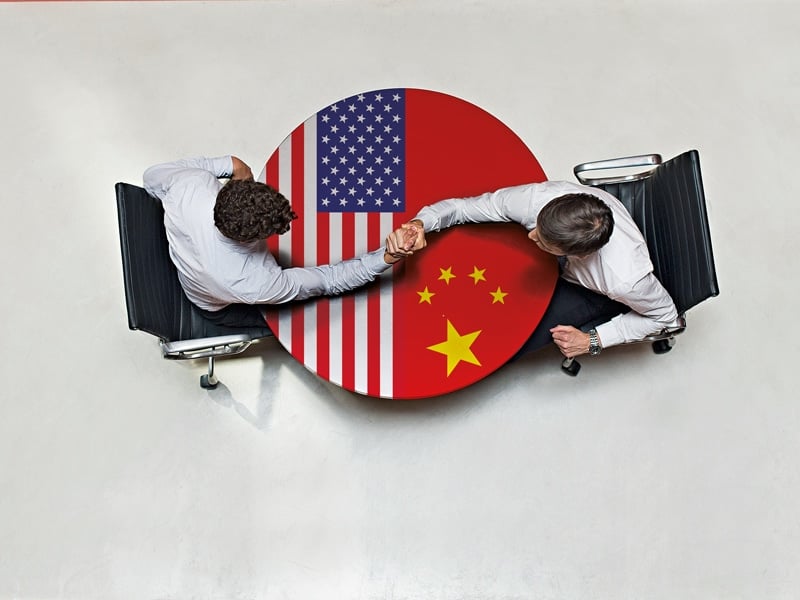
In the eight months after April 2025, US shipments of Chinese yttrium, a rare earth used to coat jet
turbine blades, fell from 333 tons to 17. In the same stretch, Nvidia’s China AI chip revenue went from
17 billion dollars a year toward near zero. Neither side has stopped trading with the other. Both have
learned exactly which chokepoint the other side can’t easily route around, and both are using it.
This isn’t an argument about which government’s trade posture is correct. It’s an observation about
structure: both countries have identified the specific input the other cannot quickly replace, and
both are now willing to restrict it as leverage. That’s a different kind of risk than a tariff, and it
calls for a different kind of preparation.
Two Chokepoints, Used the Same Way
What Beijing Controls
China processes the large majority of the world’s rare earth elements, the materials behind
everything from magnets in electric motors to coatings on jet engine turbines. In October 2025, Beijing
expanded its export licensing regime to cover the entire rare earth supply chain, not just the raw
material but the mining technology, the processing equipment, and downstream products containing even
small amounts of Chinese-origin rare earth. In June 2026, it added ten more US firms, including two of
the largest recipients of US government funding for domestic rare earth independence, to its export
control list. The yttrium numbers above are what that looks like in practice: a material that was
flowing normally one quarter and had all but stopped the next.
What Washington Controls
The US holds an equivalent chokepoint on the other end of the technology stack: the most advanced chip
designs, the manufacturing equipment to produce them, and in Nvidia’s case specifically, the AI
accelerators that Chinese firms cannot yet fully replicate domestically. Export controls first
targeted these in October 2022 and tightened repeatedly through 2025, at one point banning even chips
designed to be compliant with earlier rules. That policy has since loosened. In December 2025, the
administration shifted from presumptive denial to case by case review for Nvidia’s H200, with volume
caps and a 25 percent tariff attached. Between the tightening and the loosening, Nvidia’s China revenue
collapsed and Chinese buyers accelerated their move to domestic alternatives, which is exactly the
dynamic rare earth controls are now producing in reverse.
The pattern repeats on both sides. Every time one country restricts an input the
other depends on, the affected side spends the restriction accelerating its own domestic capacity so
the leverage stops working next time. Chinese domestic AI chips, led by Huawei, went from a marginal
share to 41 percent of the Chinese market in 2025. US federal investment in rare earth processing
has funded exactly the two companies China’s June 2026 list targeted. Neither country is trying to
end trade with the other. Both are trying to make the other’s leverage worth less.
A Partial Timeline
- 2022: First export controls on advanced chips and chipmaking equipment to China.
- Oct 2025: Expands rare earth export licensing to cover the full supply chain, mining through downstream products.
- Oct 2025: Threatens an additional 100 percent tariff on Chinese goods in response, effective November 1.
- Nov 2025: Rare earth controls suspended for one year following a leaders’ meeting; some tariffs rolled back.
- Dec 2025: Shifts Nvidia H200 policy from presumptive denial to case by case review, with volume caps and a tariff.
- Jun 2026: Adds ten US rare earth and defense linked firms to its export control list.
Prevention: Screen for Chokepoint Exposure, Not Just Country of Origin
“Diversify away from China” has been standard advice for years, and plenty of companies have acted on
it. Fewer have gone one layer deeper, into whether the alternative they diversified to still depends on
a restricted input somewhere upstream. A vendor based in Vietnam or Mexico can still be exposed to a
Chinese rare earth control if the sub-component it sources contains one. A US-based chip customer can
still be exposed to an export control shift with weeks of notice, not months. The exposure that matters
now sits below the country-of-origin label, in the bill of materials itself.
How ScopeMatch Maps to Each Failure Point
Six places where knowing the full dependency chain, not just the vendor’s address, made the difference.
Vendor risk ratings and dashboard rollups
Risk ratings and location data roll up across a full vendor base, so a company can see not just
which vendors are in China, but which vendors anywhere depend on a restricted material or
technology, before the next control list update lands.
Workflow based qualification
Standing up a supplier outside an affected jurisdiction runs through a defined pipeline, stages,
checklists, document requirements, instead of a rushed search the week an entity list update
takes effect.
Document tracking with expiry alerts
Export licenses, restricted party screening records, and compliance documentation live on the
vendor record with automated expiry alerts, so a license renewal or a screening refresh doesn’t
quietly lapse.
Checklist notes with document evidence
When a vendor confirms they’re clear of a new restriction, or discloses that they aren’t, that
answer attaches directly to the relevant checklist item with a note and any supporting
certificate, on record rather than in a thread that gets buried.
Incidents with resolution records
A shipment blocked by an export control, or an order cancelled because a part fell under a new
restriction, becomes a logged incident, type, severity, status, owner, rather than a loss nobody
can trace back at renewal time.
Assignment, roles, and comments
Every vendor has a named owner, with admin, manager, reviewer, and viewer roles controlling who
can act. When a list updates overnight, comments on the affected vendor records notify the right
people immediately instead of scattering across separate legal, procurement, and compliance
threads.
The Broader Point
Both governments are treating supply chain dependency as leverage now, and there’s no strong reason to
expect that to reverse. The companies least affected by the next control list update won’t be the ones
with the best political read on Washington or Beijing. They’ll be the ones who already know exactly
where every restricted material and technology sits in their own supply base, several layers down from
the vendor’s address. ScopeMatch exists to make that map already exist.
Sources: Benchmark Mineral Intelligence, Foundation for Defense of Democracies, CSIS, All India Radio News, ITIF, Built In, and Value Add VC. ScopeMatch — supply chain visibility for global manufacturing, distribution, and operations.